
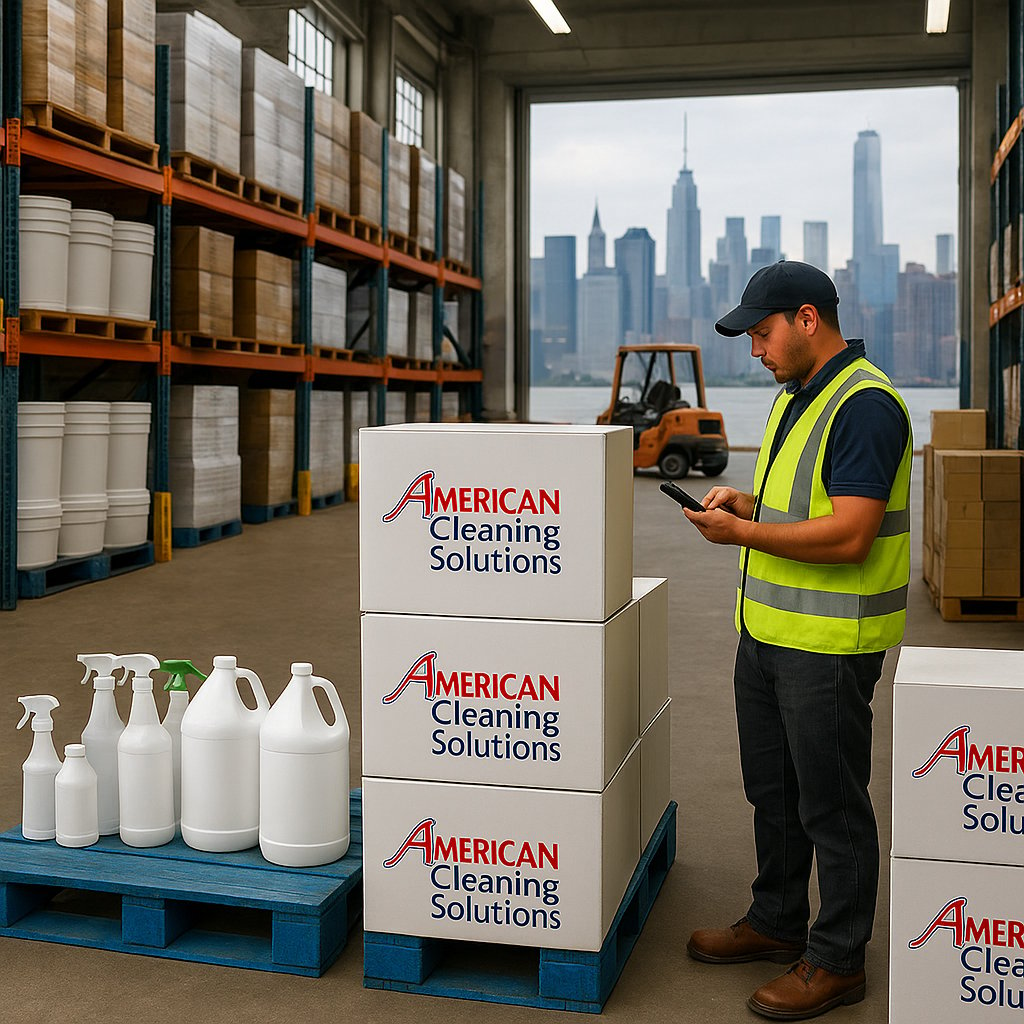
Buying bulk cleaning supplies is one of the most straightforward ways a distribution business can improve its margins, but “straightforward” does not mean automatic. The savings are real, and they can be significant. The math, though, requires a little more thought than simply comparing per-unit prices. If you are a distributor in Alabama, Georgia, North Carolina, or anywhere across the country, here is a practical framework for calculating what bulk purchasing actually puts back in your pocket.
Start With Your True Per-Unit Cost
The price on a product data sheet is never the whole story. When you buy cleaning chemicals in smaller quantities, the per-unit cost includes a margin that accounts for your supplier’s labor, smaller batch runs, and more frequent order processing. When you move to bulk volume, all of that changes.
To find your real per-unit cost at bulk, take the total invoice amount and divide it by the number of usable units, cases, or gallons in the order. Do not forget to factor in your inbound freight. A bulk order from a manufacturer that ships out of New York City can still deliver favorable landed costs to a distributor in Georgia or North Carolina, especially when the freight rate is spread across a significantly larger volume. Run that number against what you currently pay per unit at standard quantities and you will have your first real data point.
Account for the Costs That Often Get Overlooked
This is where a lot of distribution businesses undercount their savings. Beyond the per-unit price difference, bulk purchasing affects several other line items.
Order frequency and processing costs. Every purchase order your team generates carries an internal cost: staff time, approval workflows, accounts payable processing. Reducing the number of orders you place in a quarter by consolidating into fewer, larger shipments cuts that overhead in a measurable way. Some distributors find this alone justifies the shift.
Stockout risk. Running short on a high-turnover commercial cleaning chemical in the middle of a contract cycle is expensive. Emergency orders typically come with rush freight and sometimes a premium price. Holding adequate bulk inventory eliminates most of that exposure. Assign a dollar value to the stockouts you have experienced in the past year and include it in your calculation.
Private label and contract packaging opportunities. If you are working with a manufacturer that offers private label chemical solutions and contract packaging, buying in bulk often opens the door to those programs. Distributing a product under your own brand name rather than a national brand adds margin without adding complexity, and it builds customer loyalty that is harder to erode on price. For distributors across Alabama and beyond who want to differentiate, this is worth pricing out seriously.
Build a Simple Savings Model
You do not need a complicated spreadsheet. A basic model covers four columns: current annual spend at standard pricing, projected annual spend at bulk pricing, estimated freight savings or costs, and estimated reduction in order processing and stockout costs. Subtract the second row from the first, adjust for any additional storage costs you might take on, and you have a working estimate of your net annual savings.
If your current supplier cannot give you clear bulk pricing tiers and landed cost estimates, that is worth noting. A good manufacturing partner makes this kind of analysis easy to run because they want you to see the numbers. We provide technical support documentation, including Safety Data Sheets, Technical Data Sheets, and Certificates of Analysis, along with straightforward pricing discussions, so distributors can make informed decisions without guesswork.
Factor In What You Will Sell, Not Just What You Will Buy
Bulk purchasing only creates value if inventory turns. Before committing to volume, cross-reference your bulk order against your sales velocity data. Which professional cleaning chemicals, industrial cleaning chemicals, or institutional cleaning chemical lines move consistently for you? Prioritize bulk purchasing for those product categories first. For slower movers, a more targeted approach may make more sense, and a flexible manufacturing partner can often work with you on mixed-volume arrangements.
Distributors in North Carolina and other regions with strong commercial, hospitality, and institutional sectors tend to find solid velocity in janitorial concentrates, disinfectants, and surface maintenance lines. If your customer base skews toward any of those verticals, those are natural candidates for your first bulk analysis.
Revisit the Calculation Regularly
Costs shift. Freight rates move, raw material pricing fluctuates, and your sales volume will change. Treat this as a living calculation rather than a one-time exercise. Reviewing it quarterly keeps your purchasing strategy aligned with your actual business conditions and helps you catch opportunities to deepen savings as your volume grows.
We have been manufacturing commercial cleaning and maintenance chemicals in New York City since 1929, and we work with distributors and resellers across the country every day. If you would like help running the numbers on bulk pricing for your business, or if you want to explore private label and custom formulation options, please give us a call or drop us an email. We are happy to work through it with you.